Speaker: Marion Silies
Time: February 19, 2026,16:30
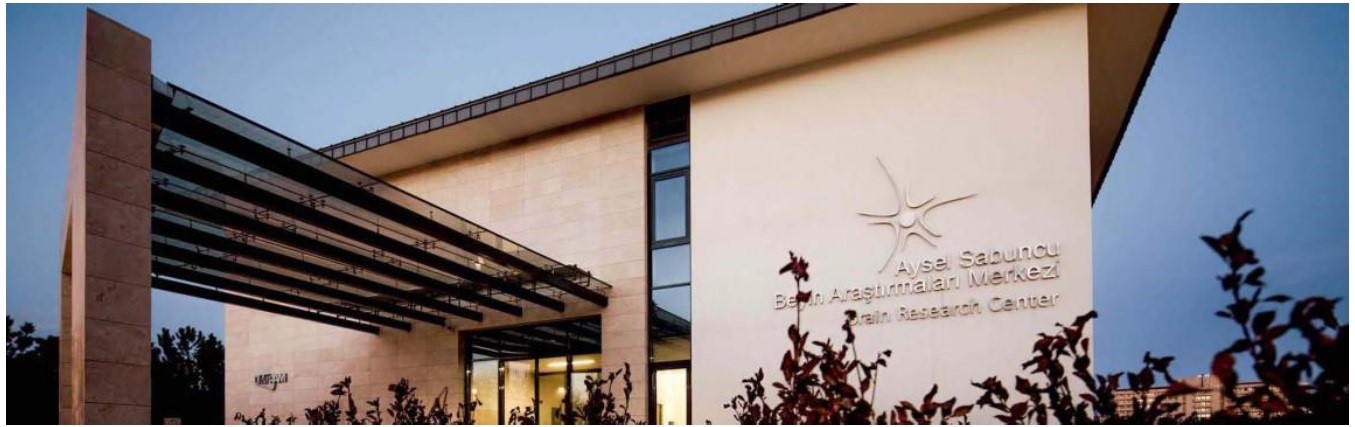
Place: Aysel Sabuncu Brain Research Center Seminar Room (SC-106)
Abstract: Our research aims to understand how the nervous system performs behaviorally relevant computations. In the human brain, billions of neurons are connected via even more connections. To reduce this complexitiy we study the brain of the fruit fly with its several orders of magnitude fewer neurons that still allow for sophisticated behaviors. Excitingly, the last years have seen the release of full fly brain connectomes, i.e. we know how >100.000 neurons are connected to each other via >50 Mio synapses. Working with a genetic model system allows us to then link anatomical data with physiological and behavioral characterization of specific cell types.
Using visual motion processing as an example, I will first discuss what we have learned about how direction-selective signals – a hallmark of motion detection – are computed locally. Next, I will show how a population code implemented in many local direction-selective T4/T5 cells allows the encoding of global motion patterns across the eye. Throughout the talk, I will link functional data to the ultrastructural basis of synaptic connectivity. Our joint findings will illustrate how we can unravel the circuit- and synaptic basis of the implementation of a behaviorally critical computation.
Bio: Marion Silies is a Professor of Neuroscience at Johannes Gutenberg University Mainz (JGU Mainz), Germany. Before joining JGU Mainz, she was as a junior group leader at the European Neuroscience Institute (ENI) in Göttingen. She conducted her postdoctoral research at Stanford University (USA) in the lab of Thomas Clandinin, following the completion of her PhD in Neuroscience from the University of Münster, Germany, in 2009, where she studied glial cell development. Her work combines experimental and computational approaches to understand how neural circuits process visual information to drive behavior, using the fruit fly as a model. Recent work is focused on understanding how visual processing is kept stable in natural, quickly changing environments. Marion has been the recipient of prestigous awards and grants, including a DFG Emmy Noether Fellowship, and successive ERC Starting and ERC Advanced grants.