
Duyurular
UMRAM araştırmacılarının Ekim 2026 ayında yayımlanan dergi makaleleri.
- Understanding Older Adults’ And Caretakers’ Attitudes Toward Social Robots Using Natural Language Processing and Thematic Analysis, International Journal of Social Robotics. Yazarlar: Begüm Çonka, Burcu Aysen Urgen, Yasemin Afacan
- A recurrent neuronal model for the effect of predictions on sensory processes, Scientific Reports. Yazarlar: Buse Merve Ürgen, Hilal İrem Baştürk, Hüseyin Boyacı

UMRAM’dan Yeni Bir Makale: Non-ideal Selection Field Induced Artifacts in X-Space MPI
Ecrin Yağız, Ahmet Rahmetullah Çağıl ve Emine Ülkü Sarıtaş, International Journal on Magnetic Particle Imaging'de "Non-ideal Selection Field Induced Artifacts in X-Space MPI" başlıklı bir makale yayınladılar. Manyetik Parçacık Görüntüleme (MPI), uygulanan…
Ecrin Yağız, Ahmet Rahmetullah Çağıl ve Emine Ülkü Sarıtaş, International Journal on Magnetic Particle Imaging’de “Non-ideal Selection Field Induced Artifacts in X-Space MPI” başlıklı bir makale yayınladılar. Manyetik Parçacık Görüntüleme (MPI), uygulanan manyetik alanlara doğrusal olmayan tepkilerini kullanarak süperparamanyetik demir oksit (SPIO) nanopartiküllerinin uzamsal dağılımını görüntüleyen, gelişmekte olan bir tıbbi görüntüleme modalitesidir. Bu çalışma, MPI’daki seçim alanının açıklanamayan doğrusal olmayışının, temel bir x-alanı yaklaşımıyla yeniden yapılandırılan görüntüde çarpılmaya neden olduğunu göstermektedir. Yeniden yapılandırılmış görüntü üzerinde hareket eden yer değiştirme haritası belirlendikten sonra, bu sorunu etkili bir şekilde çözmek için çarpıklık giderme algoritmaları uygulanabilir. Kırışık olmayan görüntü, seçim alanı gradyanlarındaki bozulma nedeniyle tarayıcının merkezinden uzaktaki bölgelerde bir çözünürlük kaybına rağmen, nanopartiküllerin konumlarını doğru bir şekilde temsil eder.
Asbtract
In magnetic particle imaging (MPI), the selection field deviates from its ideal linearity in regions away from the center of the scanner. This work demonstrates that unaccounted non-linearity of the selection field causes warping in the image reconstructed with a basic x-space approach. We also show that unwarping algorithms can be applied to effectively address this issue, once the displacement map acting on the reconstructed image is determined. The unwarped image accurately represents the locations of nanoparticles, albeit with a resolution loss in regions away from the center of the scanner due to the degradation in selection field gradients.
UMRAM’dan Yeni Bir Makale: A Parietal Region Processing Numerosity of Observed Actions: an FMRI study
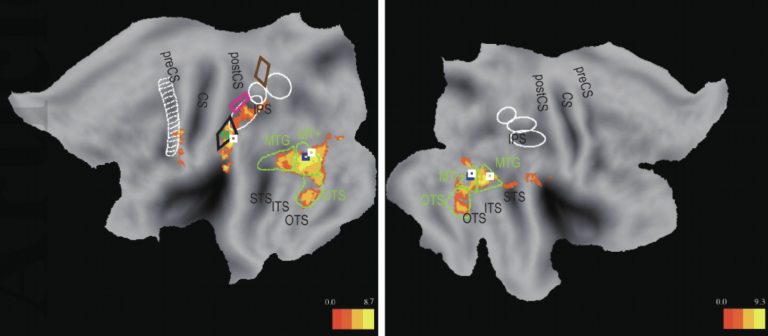
Öğretim üyemiz Burcu Ayşen Ürgen, European Journal of Neuroscience dergisinde “A Parietal Region Processing Numerosity of Observed Actions: an FMRI study” başlıklı yeni bir makale yayınladı. Makalenin diğer yazarları Tokyo Üniversitesi'nden (Japonya)…
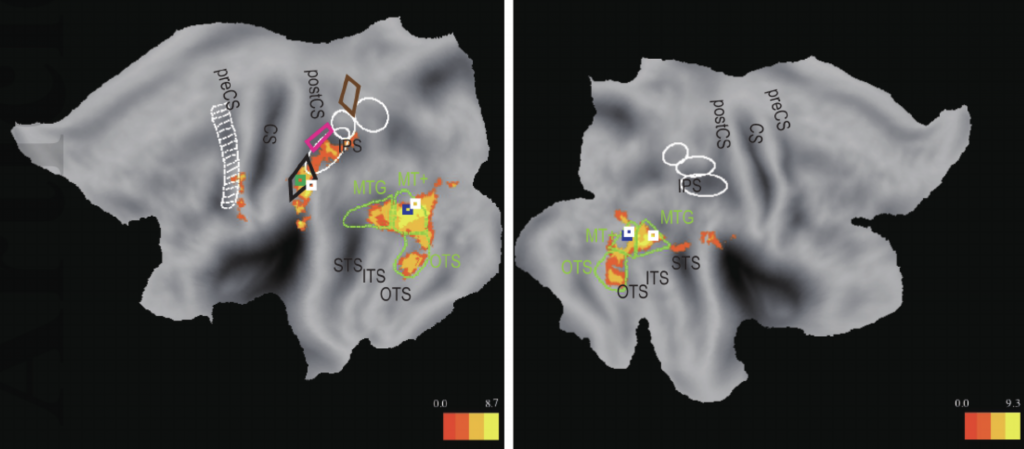
Öğretim üyemiz Burcu Ayşen Ürgen, European Journal of Neuroscience dergisinde “A Parietal Region Processing Numerosity of Observed Actions: an FMRI study” başlıklı yeni bir makale yayınladı. Makalenin diğer yazarları Tokyo Üniversitesi’nden (Japonya) Hiromasa Sawamura, Parma Üniversitesi’nden (İtalya) Guy A. Orban ve Brescia Üniversitesi’nden (İtalya) Daniele Corbo. Çalışma, insanlarda fonksiyonel manyetik rezonans görüntüleme kullanarak eylem gözlemi sırasında çokluğa özgü beyin bölgelerini inceledi.
ABSTRACT
When observing others’ behavior, it is important to perceive not only the identity of the observed actions, but also the number of times they were performed. Given the mounting evidence implicating posterior parietal cortex in action observation, and in particular that of manipulative actions, the aim of this study was to identify the parietal region, if any, that contributes to the processing of observed‐manipulative‐action numerosity, using the functional magnetic resonance imaging technique. Twenty‐one right‐handed healthy volunteers performed two discrimination tasks while in the scanner, responding to video stimuli in which an actor performed manipulative actions on colored target balls that appeared four times consecutively. The subjects discriminated between two small numerosities of either observed manipulative actions (“Action” condition) or colors of balls (“Ball” condition). A significant difference between the “Action” and “Ball” conditions was observed in occipito‐temporal cortex and the putative human anterior intraparietal sulcus (phAIP) area as well as the third topographic map of numerosity‐selective neurons at the post‐central sulcus (NPC3) of the left parietal cortex. A further ROI analysis of the group‐average data showed that at the single voxel level the latter area, more than any other parietal or occipito‐temporal numerosity map, favored numerosity of observed actions. These results suggest that phAIP processes the identity of observed manipulative actions, while neighboring NPC3 likely processes the numerosity of the identified observed actions.
UMRAM’dan Yeni Bir Makale: Accelerating the co-simulation method for the design of transmit array coils for MRI
UMRAM'ın RF iletim dizi bobinlerini tasarlamak için hızlı yöntemlere odaklanan çalışması, “Accelerating the co-simulation method for the design of transmit array coils for MRI” başlıklı bir makale ile yayımlandı. Bu çalışmada, transmit…
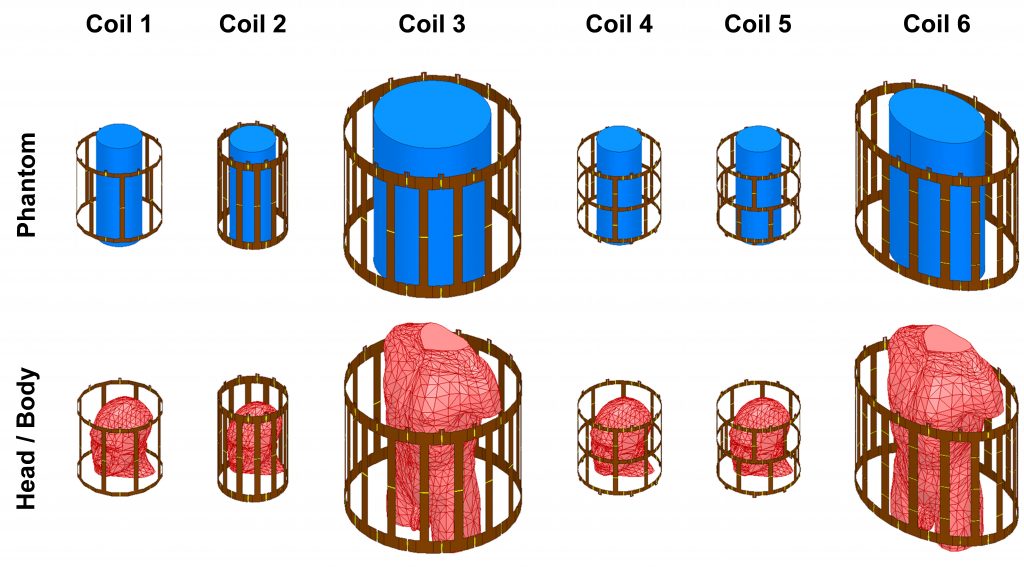
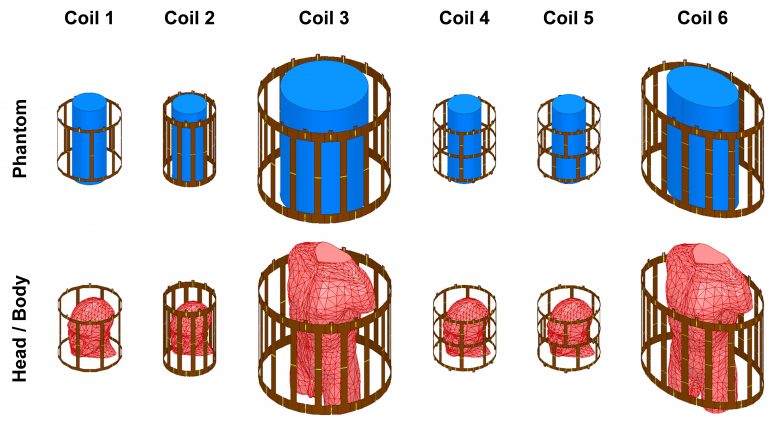
UMRAM’ın RF iletim dizi bobinlerini tasarlamak için hızlı yöntemlere odaklanan çalışması, “Accelerating the co-simulation method for the design of transmit array coils for MRI” başlıklı bir makale ile yayımlandı. Bu çalışmada, transmit dizi bobinlerinin tasarımı için ko-simülasyon yöntemi önemli ölçüde hızlandırılmıştır. Kavramın bir kanıtı olarak, sekiz kanallı dejenere bir kuş kafesi bobini hızlı ve doğru bir şekilde tasarlanır ve yapılır. UMRAM tesisleri şuan 3 T’de kafa görüntüleme için kullanılabilen bu bobin ile donatıldı. Makalenin ilk yazarı Ergin Atalar‘ın doktora öğrencisi olan Alireza Sadeghi ‐ Tarakameh olup, diğerleri ise Ehsan Kazemivalipour, Umut Gündoğdu ve Serhat Erdoğan’dır.
Abstract
Objective Accelerating the co-simulation method for the design of transmit array (TxArray) coils is studied using equivalent circuit models.
Materials and methods Although the co-simulation method dramatically reduces the complexity of the design of TxArray coils, finding the optimum solution is not trivial since there exist many local minima in the optimization problem. We propose to utilize an equivalent circuit model of the TxArray coil to obtain a proper initial guess for the optimization process of the co-simulation method. To prove the concept, six different TxArray coils (i.e., three degenerate birdcage coils (DBC), two dual-row head coils, and one elliptical body TxArray coil) with two different loading strategies (cylindrical phantom and human head/body model) at 3 T field strength are investigated theoretically; as an example study, an eight-channel head-DBC is constructed using the obtained values.
Results This approach accelerates the design process more than 20-fold for the coils that are investigated in this manuscript.
Conclusion A fast and accurate method for tuning and decoupling of a TxArray coil can be achieved using its equivalent circuit model combined with the co-simulation method.
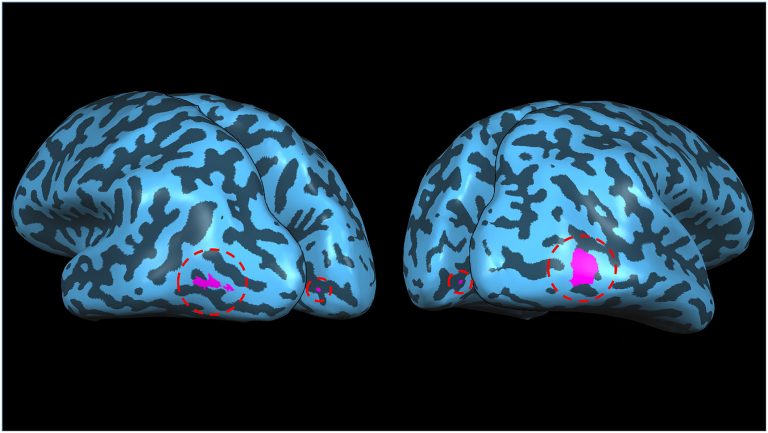
UMRAM’dan Yeni Bir Makale: Distinct patterns of surround modulation in V1 and hMT+
Umram mezunlarından Görkem Er, Zahide Pamir ve Umram öğretim üyemiz Doç.Dr.Hüseyin Boyacı 'nın yeni makalesi ''Distinct patterns of surround modulation in V1 and hMT+'' NeuroImage dergisinde yayınlandı. Abstract Modulation of a neuron’s…
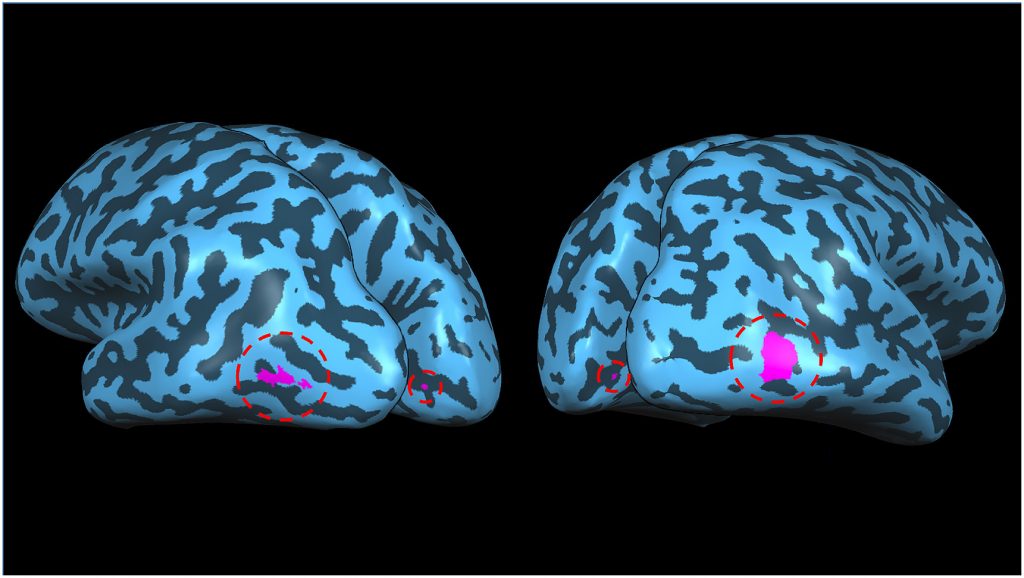
Umram mezunlarından Görkem Er, Zahide Pamir ve Umram öğretim üyemiz Doç.Dr.Hüseyin Boyacı ‘nın yeni makalesi ”Distinct patterns of surround modulation in V1 and hMT+” NeuroImage dergisinde yayınlandı.
Abstract
Modulation of a neuron’s responses by the stimuli presented outside of its classical receptive field is ubiquitous in the visual system. This “surround modulation” mechanism is believed to be critical for efficient processing and leads to many well-known perceptual effects. The details of surround modulation, however, are still not fully understood. One of the open questions is related to the differences in surround modulation mechanisms in different cortical areas, and their interactions. Here we study patterns of surround modulation in primary visual cortex (V1) and middle temporal complex (hMT+) utilizing a well-studied effect in motion perception, where human observers’ ability to discriminate the drift direction of a grating improves as its size gets bigger if the grating has a low contrast, and deteriorates if it has a high contrast. We first replicated the findings in the literature with a behavioral experiment using small and large (1.67 and 8.05 degrees of visual angle) drifting gratings with either low (2%) or high (99%) contrast presented at the periphery. Next, using functional MRI, we found that in V1 with increasing size cortical responses increased at both contrast levels. Whereas in hMT+ with increasing size cortical responses remained unchanged or decreased at high contrast, and increased at low contrast, reflecting the perceptual effect. We also show that the divisive normalization model successfully predicts these activity patterns, and establishes a link between the behavioral results and hMT+ activity. We conclude that surround modulation patterns in V1 and hMT+ are different, and that the size-contrast interaction in motion perception is likely to originate in hMT+.

UMRAM’dan Yeni Bir Makale: Anisotropic dynamics of a self-assembled colloidal chain in an active bath
Mehdi Shafiei Aporvari, Mustafa Utkur, and Emine Ulku Saritas, "Anisotropic dynamics of a self-assembled colloidal chain in an active bath" başlıklı bir makaleleri Soft Matter dergisinde yayımlandı. Bu çalışma Giovanni Volpe (daha…
Mehdi Shafiei Aporvari, Mustafa Utkur, and Emine Ulku Saritas, “Anisotropic dynamics of a self-assembled colloidal chain in an active bath” başlıklı bir makaleleri Soft Matter dergisinde yayımlandı. Bu çalışma Giovanni Volpe (daha önce Bilkent’teki Fizik Bölümü, şimdi Göteborg Üniversitesi ile) ve Joakim Stenhammar (Lund Üniversitesi ile) ile ortak bir çalışmaydı.
Abstract
Anisotropic macromolecules exposed to non-equilibrium (active) noise are very common in biological systems, and an accurate understanding of their anisotropic dynamics is therefore crucial. Here, we experimentally investigate the dynamics of isolated chains assembled from magnetic microparticles at a liquid-air interface and moving in an active bath consisting of motile E. coli bacteria. We investigate both the internal chain dynamics and the anisotropic center-of-mass dynamics through particle tracking. We find that both the internal and center-of-mass dynamics are greatly enhanced compared to the passive case, i.e., a system without bacteria, and that the center-of-mass diffusion coefficient D features a non- monotonic dependence as a function of the chain length. Furthermore, our results show that the relationship between the components of D parallel and perpendicular with respect to the direction of the applied magnetic field is preserved in the active bath compared to the passive case, with a higher diffusion in the parallel direction, in contrast to previous findings in the literature. We argue that this qualitative difference is due to subtle differences in the experimental geometry and conditions and the relative roles played by long-range hydrodynamic interactions and short-range collisions.

Emine Ülkü Sarıtaş Doçent unvanı aldı
UMRAM ve Bilkent Elektrik ve Elektronik Mühendisliği öğretim üyesi Emine Ülkü Sarıtaş, Doçent unvanı almıştır. Emine Ülkü Sarıtaş 2013 yılında Bilkent’e öğretim üyesi olarak katılmadan önce, 2010-2013 yılları arasında Kaliforniya Üniversitesi Berkeley,…
UMRAM ve Bilkent Elektrik ve Elektronik Mühendisliği öğretim üyesi Emine Ülkü Sarıtaş, Doçent unvanı almıştır. Emine Ülkü Sarıtaş 2013 yılında Bilkent’e öğretim üyesi olarak katılmadan önce, 2010-2013 yılları arasında Kaliforniya Üniversitesi Berkeley, Biyomühendislik Bölümü’nde doktora sonrası araştırmacı olarak çalışmıştır. Stanford Üniversitesi Elektrik Mühendisliği Bölümü’nden 2009 yılında doktora ve 2004 yılında yüksek lisans derecelerini, Bilkent EEE’den 2002 yılında lisans derecesini almıştır. Doktora çalışmaları sırasında Lucent Technologies Stanford Lisans Üstü Bursu ve doktora sonrası çalışmaları sırasında Siebel Kök Hücre Enstitüsü Doktora Sonrası Bursu’nu almıştır. Emine Ülkü Sarıtaş, Türkiye Bilimler Akademisi (TÜBA) tarafından verilen 2015 “Üstün Başarılı Genç Bilim İnsanı Ödülü” (GEBIP), Bilim Akademisi tarafından verilen 2016 “Genç Bilim İnsanı Ödülü” (BAGEP), Bilim Kahramanları Derneği tarafından verilen 2017 “Yılın Bilim İnsanı Ödülü” ve Türkiye Bilimsel ve Teknolojik Araştırma Kurumu (TÜBİTAK) tarafından verilen 2019 “Teşvik Ödülü” sahibidir. Ayrıca 2018 yılında Bilkent Üniversitesi Öğretimde Üstün Başarı Ödülü’ne layık görülmüştür.
Doç. Dr. Sarıtaş araştırmalarında yenilikçi manyetik rezonans görüntüleme (MRI) ve manyetik parçacık görüntüleme (MPG) sistemleri, ve bu sistemlerin tanısal ve bilimsel uygulamalarına odaklanmaktadır. Bu görüntüleme yöntemlerinin teknik ve klinik kabiliyetlerini geliştirmek için yenilikçi teknolojiler geliştirmektedir. Şu ana kadarki öne çıkan katkıları, hedeflenen vücut bölgelerinde yüksek çözünürlüklü difüzyon ağırlıklı MRG elde etmeyi sağlayan görüntüleme teknikleri geliştirilmesi, manyetik görüntüleme sistemlerinin insan güvenliği sınırlarının kapsamlı olarak belirlenmesi ve MPG için yeni kontrast mekanizmaları geliştirilmesidir. Araştırmaları IEEE Transactions on Medical Imaging (TMI), Magnetic Resonance in Medicine, Applied Physics Letters ve Advanced Materials gibi önde gelen dergilerde yayınlanmıştır. Akademik çalışmaları 45 dergi yayını, 110 konferans bildirisi, 1 kitap bölümü ve 1 ABD patenti ile sonuçlanmış ve 2200’den fazla alıntı almıştır.
Doç. Dr. Sarıtaş şu anda Ulusal Manyetik Rezonans Araştırma Merkezi (UMRAM) için Yardımcı Direktör, IEEE TMI için Yardımcı Editör ve International Journal on Magnetic Particle Imaging (IJMPI) için Yayın Kurulu Üyesi olarak görev yapmaktadır. Daha önce Nature Scientific Reports için Yayın Kurulu Üyesi olarak görev yapmıştır ve IEEE Türkiye Mühendislikte Kadın Komitesi başkanlığını yapmıştır.
Etik ve Yasal İzinler
Sayın 3T kullanıcıları, Sizlerden çalışmalarınızın etik ve/veya yasal izinlerini bize iletmenizi rica ediyoruz. Bildiğiniz gibi bu izinler tüm insan ve hayvan çalışmaları için zorunludur. İzinlerinizle ilgili dosyaları basılı olarak veya elektronik ortamda…
Sayın 3T kullanıcıları,
Sizlerden çalışmalarınızın etik ve/veya yasal izinlerini bize iletmenizi rica ediyoruz. Bildiğiniz gibi bu izinler tüm insan ve hayvan çalışmaları için zorunludur. İzinlerinizle ilgili dosyaları basılı
olarak veya elektronik ortamda UMRAM yönetimine iletebilirsiniz.
Bununla birlikte, bundan böyle takvim üzerinde MR rezervasyonlarınızı yaparken o çalışmaya özel etik/yasal onay numaranızı randevunuzda belirtmenizi rica ediyoruz.
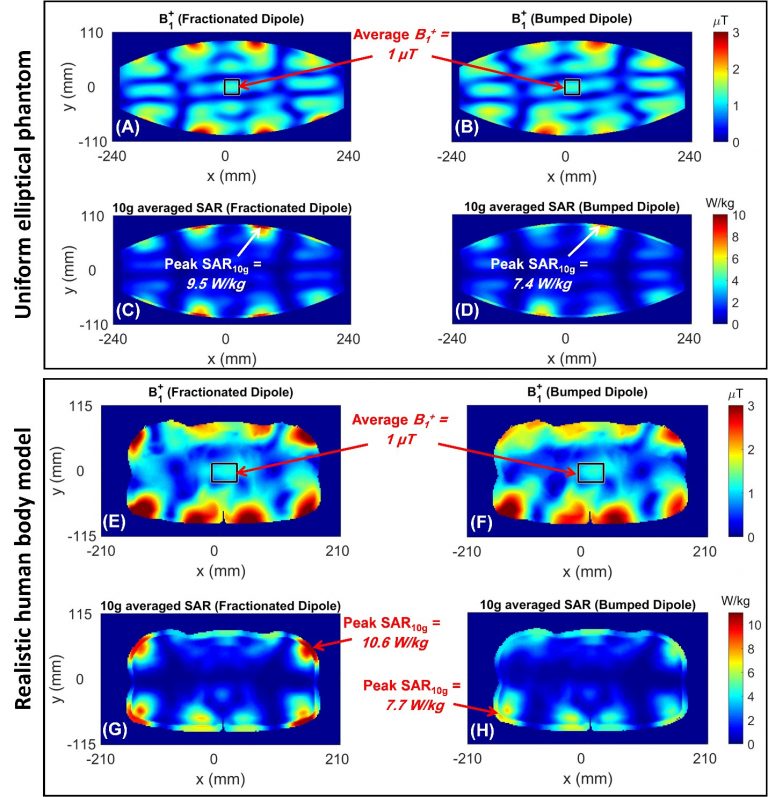
UMRAM’dan Yeni Bir Makale; Improving radiofrequency power and specific absorption rate management with bumped transmit elements in ultra‐high field MRI
Ergin Atalar'ın doktora öğrencisi olan Alireza Sadeghi-Tarakameh, CMRR ve UMRAM arasındaki ortak çalışmanın sonuçlarını “ultra yüksek alan MRG'de çarpılmış iletim elemanları ile iyileştirme” başlıklı bir makalede yayınladı. Bu çalışmanın temel amacı, prostat…
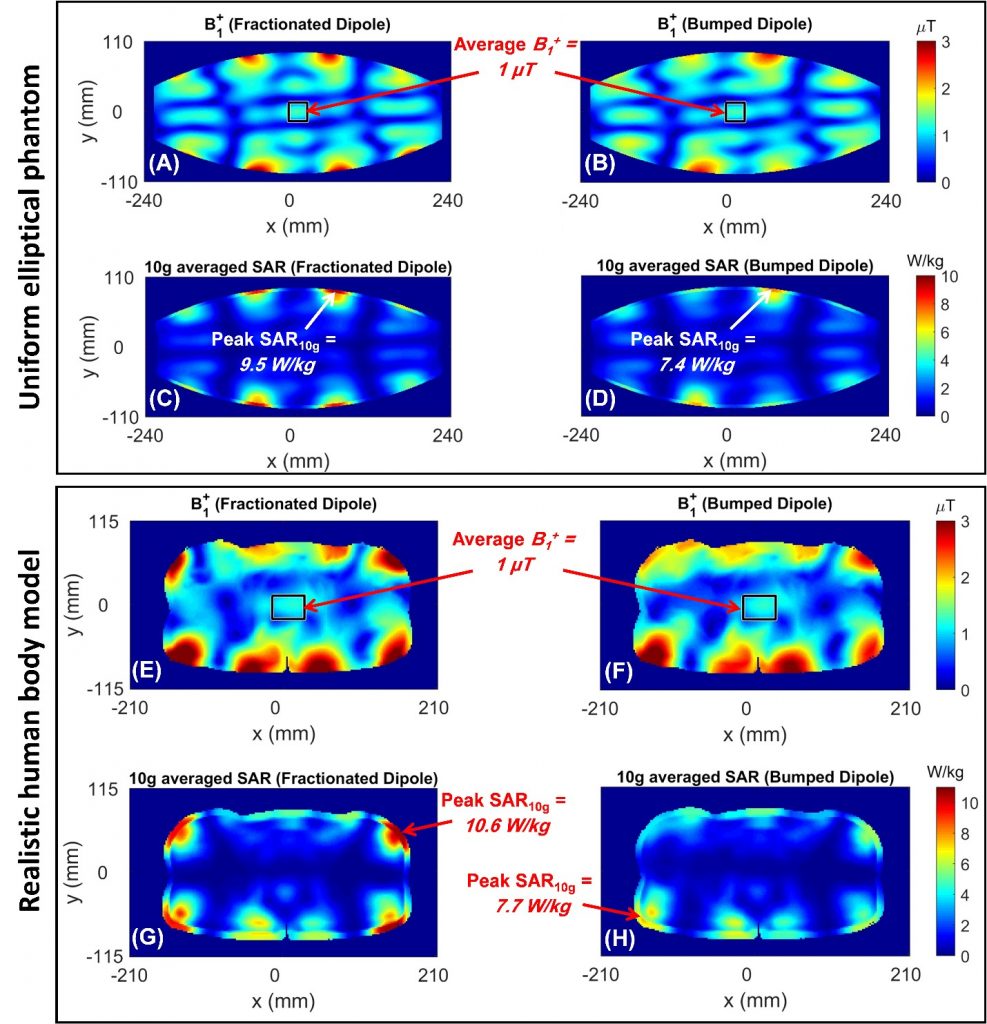
Ergin Atalar‘ın doktora öğrencisi olan Alireza Sadeghi-Tarakameh, CMRR ve UMRAM arasındaki ortak çalışmanın sonuçlarını “ultra yüksek alan MRG’de çarpılmış iletim elemanları ile iyileştirme” başlıklı bir makalede yayınladı. Bu çalışmanın temel amacı, prostat görüntülemeyi kolaylaştırmak ve ultra yüksek alan MRG’de hasta güvenliğini sağlamaktır. Makalenin kıdemli yazarı Yiğitcan Eryaman, CMRR’de yardımcı doçenttir ve doktorasını Bilkent Üniversitesi’nden almıştır. Bu makalenin diğer yazarları Minnesota Üniversitesi’nden Gregor Adriany, Gregory J. Metzger, Russell L. Lagore, Steve Jungst, Lance DelaBarre, Pierre-Francois Van de Moortele ve Kamil Uğurbil’dir.
Abstract
Purpose
In this study, we investigate a strategy to reduce the local specific absorption rate (SAR) while keeping B1+ constant inside the region-of-interest (ROI) at the ultra-high field (B0 ≥ 7 T) MRI.
Methods Locally raising the resonance structure under the discontinuity (i.e., creating a bump) increases the distance between the accumulated charges and the tissue. As a result, it reduces the electric field and local SAR generated by these charges inside the tissue. The B1+ at a point that is sufficiently far from the coil however is not affected by this modification. In this study, three different resonant elements (i.e., loop coil, snake antenna, and fractionated dipole (FD)) are investigated. For experimental validation, a bumped FD is further investigated at 10.5 T. After the validation, the transmit performances of eight-channel arrays of each element are compared through EM simulations. Results Introducing a bump reduced the peak 10g-averaged SAR by 21, 26, 23% for the loop and snake antenna at 7 T, and FD at 10.5 T, respectively. In addition, eight-channel bumped FD array at 10.5 T had a 27% lower peak 10g-averaged SAR in a realistic human body simulation (i.e., prostate imaging) compared to an eight-channel FD array. Conclusion In this study, we investigated a simple design strategy based on adding bumps to a resonant element to reduce the local SAR while maintaining B1+ inside an ROI. As an example, we modified an FD and performed EM simulations and phantom experiments with a 10.5T scanner. Results show that the peak 10g-averaged SAR can be reduced more than 25%.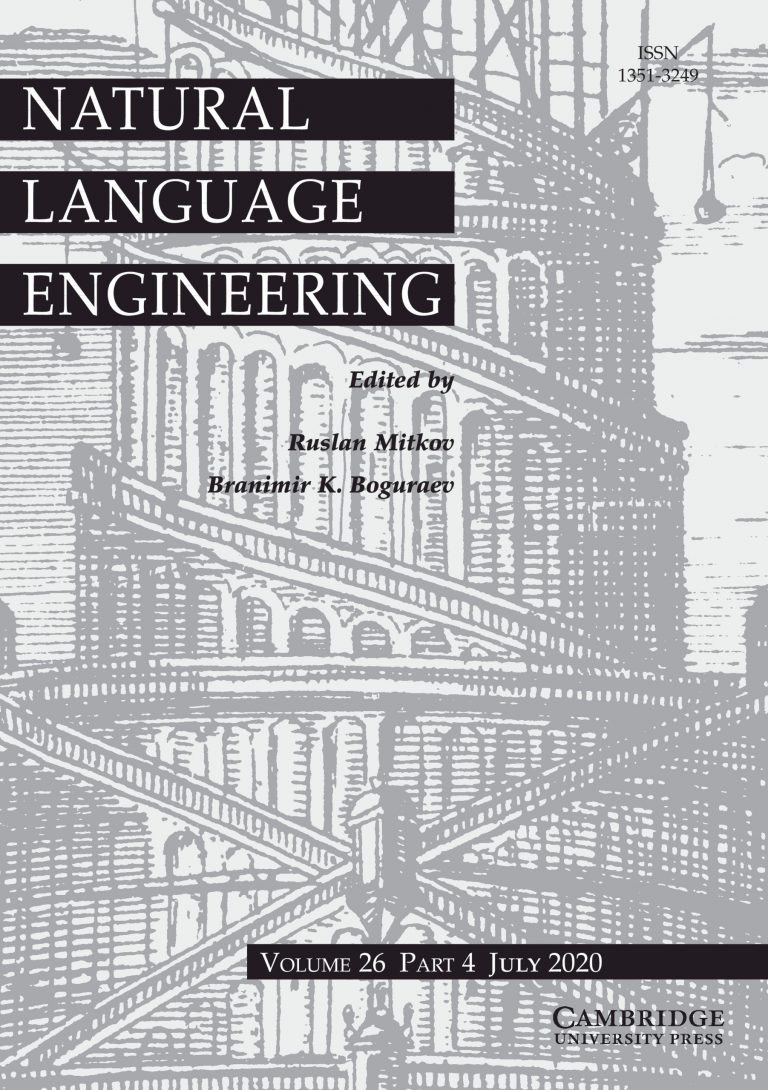
UMRAM’dan Yeni Bir Makale: Imparting interpretability to word embeddings while preserving semantic structure
Koc Lab’ın doğal dil işleme üzerine çalışması, Cambridge Üniversitesi Yayınları Doğal Dil Mühendisliği Dergisi’nde yayınlanan “Anlamsal yapıyı korurken kelime düğünlerine yorumlanabilirlik kazandırmak” başlıklı bir makaleyle sonuçlandı. Makalenin yazarları Lüfti Kerem Şenel, İhsan Utlu, Furkan Şahinuç, Haldun Özaktaş ve Aykut Koç.
Kelime düğünleri birçok NLP görevinde çok önemli araçlardır. Bununla birlikte, kara kutu doğaları kelime düğünlerini açıklanabilir ve yorumlanabilir olmaktan alıkoyar. Bu çalışmada, ilk kez, geleneksel GloVe algoritmasına harici bir objektif fonksiyon ekleyerek, kelimelerin düğünlerine yorumlanabilir olma özelliği verilmektedir. Ayrıca, yorumlanabilir kelime düğünlerinin ortak öğrenimi, kelime düğünlerinin altında yatan anlamsal yapıyı bozmaz.
Kelime düğünleri içindeki yorumlanabilirlik derecesindeki artış, insan deneklerin elle değerlendirilmesinin yanı sıra nitel ve nicel testlerle de gösterilmiştir. Elde edilen sonuçlar, ifade edilen kelime düğünlerinin literatürdeki benzer çalışmalardan daha iyi performans gösterdiğini göstermektedir.
NLP alanındaki açıklanabilir AI algoritmalarını geliştirmek için çalışmanın katkısı esastır.
Abstract
As a ubiquitous method in natural language processing, word embeddings are extensively employed to map semantic properties of words into a dense vector representation. They capture semantic and syntactic relations among words, but the vectors corresponding to the words are only meaningful relative to each other. Neither the vector nor its dimensions have any absolute, interpretable meaning. We introduce an additive modification to the objective function of the embedding learning algorithm that encourages the embedding vectors of words that are semantically related to a predefined concept to take larger values along a specified dimension, while leaving the original semantic learning mechanism mostly unaffected. In other words, we align words that are already determined to be related, along predefined concepts. Therefore, we impart interpretability to the word embedding by assigning meaning to its vector dimensions. The predefined concepts are derived from an external lexical resource, which in this paper is chosen as Roget’s Thesaurus. We observe that alignment along the chosen concepts is not limited to words in the thesaurus and extends to other related words as well. We quantify the extent of interpretability and assignment of meaning from our experimental results. Manual human evaluation results have also been presented to further verify that the proposed method increases interpretability. We also demonstrate the preservation of semantic coherence of the resulting vector space using word-analogy/word-similarity tests and a downstream task. These tests show that the interpretability-imparted word embeddings that are obtained by the proposed framework do not sacrifice performances in common benchmark tests.
3T Kullanım Kuralları Güncellemesi
Sayın 3T Kullanıcıları,
Daha önce duyurulan hijyen kurallarına titizlikle uyulduğu için herkese teşekkür ederiz. Şu ana kadar 3T çalışmaları sorunsuz bir şekilde ilerlemekte. Bununla birlikte kullanımın daha verimli hale gelmesi için aşağıdaki değişikliklerin yapılmasına karar verildi:
1. İnsan ve hayvan deneyleri ardından bırakılması gereken boşluk 3 saate indirildi.
2. Sabah saatlerinde alınan randevunun en geç saat 14:00’de bitmesi zorunludur. Buna zorunlu boşluk süresi de dahildir. Örneğin; bu bir insan çalışması ise, çalışmanın kendisinin saat 11:00’de bitmesi zorunludur.
3. Öğleden sonra randevusunun saat 14:00’den sonra başlaması zorunludur. Mümkünse lütfen çalışmalarınızı 14:00’den sonra en erken olacak şekilde başlatınız, böylece akşam saatlerinde bir çalışma daha yapılabilmesi için yeterli zaman kalacaktır.
Scanner Takvimi Kullanımı, Randevu Alma Kuralları
1. Haftaiçi 09:00 – 17:30 saatleri arasında 2 iş günü ve daha öncesinden takvimde 3 saatten fazla yer ayırmaya merkezimiz tarafından izin verilmemektedir. Özel durumlar için önceden yetkili personel ile iletişime geçebilirsiniz.
2. Takvimde ayrılan çalışma süresine önceden haber verip mazeret bildirmeksizin 15 dakikadan geç gelenlerin çalışma saati merkezimiz tarafından iptal edilerek kullanmak isteyen başka araştırmacılarımıza aktarılabilmektedir.
3. Program iptalini 1 gün öncesinden yapan kullanıcıların gruba scanner’ın o saatlerde boş olduğuna dair bilgilendirme mesajı atmaları gerekmektedir.
4. Program iptailini gün içinde yapacak olan kullanıcıların, yerlerine çalışacak başka bir kullanıcı bulmaları rica edilmektedir. Bunun için öncelikle kendisinden sonraki kullanıcıya, o uygun değilse başka bir kullanıcıya ulaşmaları tavsiye edilir. Bu ihtimallerin hiç biri mümkün olmadıysa yetkili personele ve gruba söz konusu saatler arasında scannerın boş olduğu ile ilgili bir bilgilendirme e-maili atıp çalışmalarını iptal edebilirler.
5. 30 günlük süre içinde 2 kez üst üste, alınan randevuya gelinmediği halde takvimden kaldırmayan ve aynı zamanda gruba ya da yetkili personele bilgilendirme yapmayan kullanıcıların takvim kullanım ve resevasyon yapma yetkisi engellenebilecektir.
6. Scanner’da teknik arızlardan kaynaklanan zaman kayıpları yetkili personelin bilgisi dahilinde ve değerlendirmesi ile takvimdeki yoğunluğun elverdiği ölçüde aynı gün içinde telafi edilmeye çalışılacaktır.
7. UMRAM 3T Takviminde ayrılan çalışma saatleri karışıklığa neden olmaması için diğer rezervasyonlarla aynı renkte olmalıdır.
Mr görüntüleme Hijyen Prosedürleri için lütfen tıklayınız; https://umram.bilkent.edu.tr/index.php/tr/2020/06/15/umram-mr-goruntuleme-cihazi-covid-19-icin-hijyen-prosedurleri/
UMRAM’dan Yeni Bir Makale: In vivo human head MRI at 10.5T: A radiofrequency safety study and preliminary imaging results
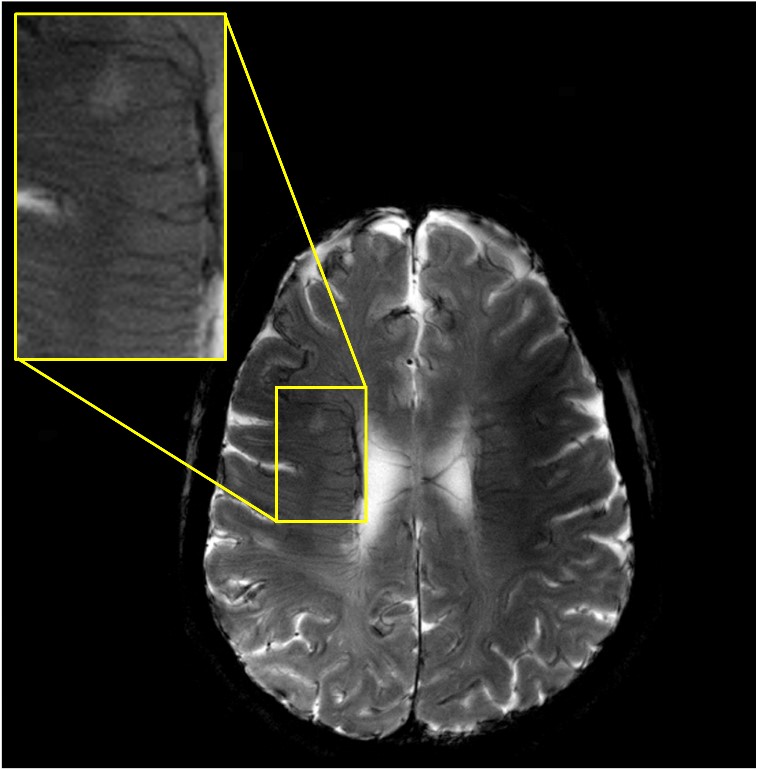
CMRR ve UMRAM arasındaki işbirliğine dayalı bir çalışma “10.5T’de in vivo insan kafası MRG: Bir radyofrekans güvenlik çalışması ve ön görüntüleme sonuçları” başlığı ile yayımlandı. Bu çalışmada, 10.5T sisteminden elde edilen ilk insan beyni görüntüleri gösterilmektedir. 10.5T şu anda dünyadaki en yüksek alan gücü olan tam vücut görüntüleme sistemidir ve Minnesota Üniversitesi’ndeki CMRR’de bulunmaktadır. Makalenin ilk yazarı Prof.Dr.Ergin Atalar‘ın doktora öğrencisi olan Alireza Sadeghi ‐ Tarakameh‘dir. Makalenin kıdemli yazarı Yiğitcan Eryaman, CMRR’de yardımcı doçent olarak görev yapmaktadır ve Bilkent Üniversitesi’nden doktora derecesini almıştır. Makalenin diğer yazarları ise Lance DelaBarre, Russell L. Lagore, Angel Torrado-Carvajal, Xiaoping Wu, Andrea Grant, Gregor Adriany, Gregory J. Metzger, Pierre-Francois Van de Moortele ve CMRR’den Kamil Uğurbil’dir.
Abstract
Purpose
The purpose of this study is to safely acquire the first human head images at 10.5 T.
Methods
In order to ensure safety of subjects, we validated the electromagnetic (EM) simulation model of our coil. We obtained quantitative agreement between simulated and experimental B1+ and specific absorption rate (SAR). Using the validated coil model, we calculated radiofrequency (RF) power levels to safely image human subjects. We conducted all experiments and imaging sessions in a controlled RF safety lab and the whole-body 10.5T scanner in the Center for Magnetic Resonance Research (CMRR).
Results
Quantitative agreement between the simulated and experimental results was obtained including S-parameters, B1+ maps, and SAR. We calculated peak 10 g average SAR using four different realistic human body models for a quadrature excitation and demonstrated that the peak 10 g SAR variation between subjects was less than 30%. We calculated safe power limits based on this set and used those limits to acquire T2- and T2*-weighted images of human subjects at 10.5 T.
Conclusion
In this study, we acquired the first in vivo human head images at 10.5 T using an eight-channel transmit/receive (Tx/Rx) coil. We implemented and expanded a previously proposed workflow to validate the EM simulation model of the eight-channel Tx/Rx coil. Using the validated coil model, we calculated RF power levels to safely image human subjects.
UMRAM’dan Yeni Bir Makale: Expression Levels of SMAD Specific E3 Ubiquitin Protein Ligase 2 (Smurf2) and its Interacting Partners Show Region-specific Alterations During Brain Aging
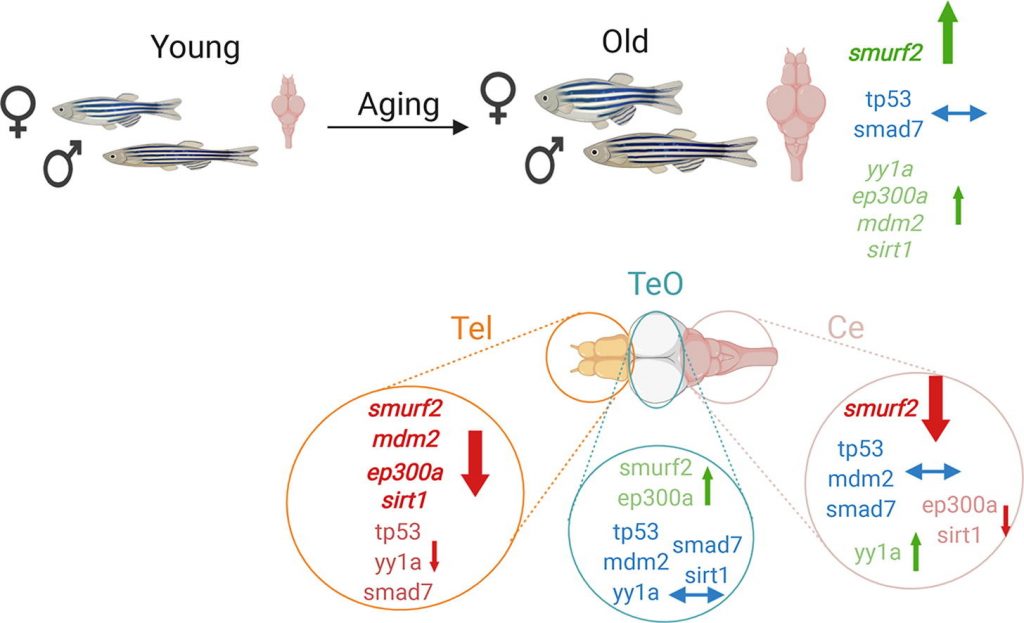
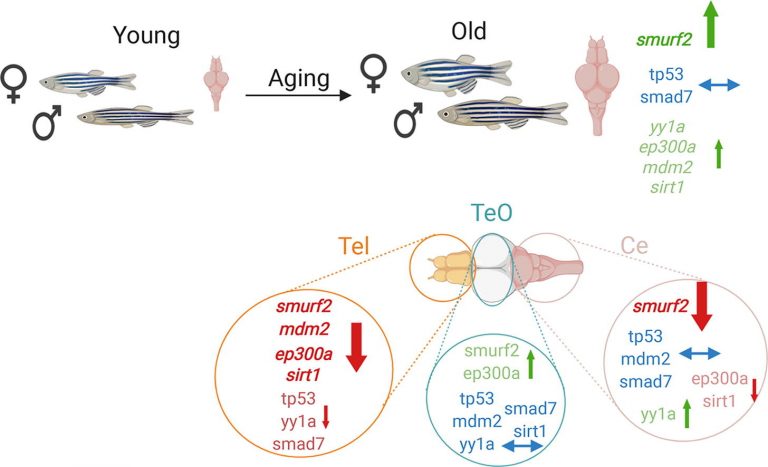
Melek Umay Tüz Şaşik, Elif Tuğçe Karoğlu Eravşar, Meriç Kınalı, Ayça Ergül Arslan ve Michelle Adams ‘ın ”Expression Levels of SMAD Specific E3 Ubiquitin Protein Ligase 2 (Smurf2) and its Interacting Partners Show Region-specific Alterations During Brain Aging” başlıklı yeni makaleleri yayımlandı.
Abstract
Aging occurs due to a combination of several factors, such as telomere attrition, cellular senescence, and stem cell exhaustion. The telomere attrition-dependent cellular senescence is regulated by increased levels of SMAD specific E3 ubiquitin protein ligase 2 (smurf2). With age smurf2 expression increases and Smurf2 protein interacts with several regulatory proteins including, Smad7, Ep300, Yy1, Sirt1, Mdm2, and Tp53, likely affecting its function related to cellular aging. The current study aimed at analyzing smurf2 expression in the aged brain because of its potential regulatory roles in the cellular aging process. Zebrafish were used because like humans they age gradually and their genome has 70% similarity. In the current study, we demonstrated that smurf2 gene and protein expression levels altered in a region-specific manner during the aging process. Also, in both young and old brains, Smurf2 protein was enriched in the cytosol. These results imply that during aging Smurf2 is regulated by several mechanisms including post-translational modifications (PTMs) and complex formation. Also, the expression levels of its interacting partners defined by the STRING database, tp53, mdm2, ep300a, yy1a, smad7, and sirt1, were analyzed. Multivariate analysis indicated that smurf2, ep300a, and sirt1, whose proteins regulate ubiquitination, acetylation, and deacetylation of target proteins including Smad7 and Tp53, showed age- and brain region-dependent patterns. Our data suggest a likely balance between Smurf2- and Mdm2-mediated ubiquitination, and Ep300a-mediated acetylation/Sirt1-mediated deacetylation, which most possibly affects the functionality of other interacting partners in regulating cellular and synaptic aging and ultimately cognitive dysfunction.